May 27, 2026
Written by
Ryan Farrow
Creative Director

When Hogarths Hotel & Spa first came to us, they had a problem that a lot of established hospitality businesses share: the real-world experience was exceptional, but the website wasn't doing it justice.
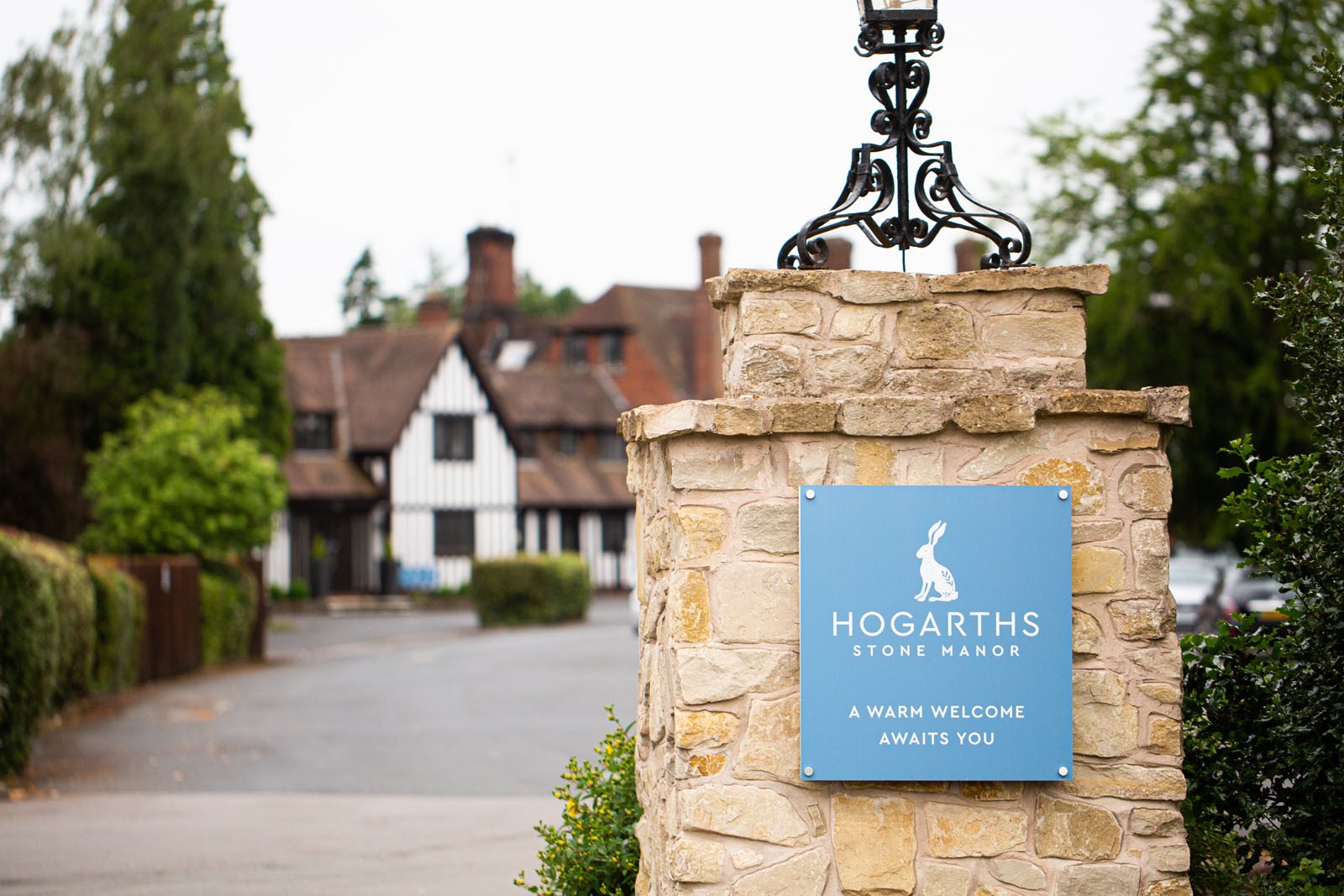
Two luxury four-star properties, Hogarths Solihull and Stone Manor in Worcestershire, were being managed through a single ageing website that was difficult to update, visually out of step with the brand they had invested heavily in, and scoring just 16 out of 100 on Google's performance benchmark. The site was also sending guests to external booking platforms to complete their reservations, meaning the hotel was losing both the conversion data and a significant chunk of the SEO benefit that should have been strengthening their own domain.
What followed was one of the most interesting projects I've worked on as a designer, and one with measurable results I'm genuinely proud of.
Starting with the user, not the brief
Before we wrote a single line of code or opened a single design file, we ran a full UX audit and persona research process with the Hogarths team.
This isn't how every agency approaches a hotel website project. A lot of studios go straight to design: pick some beautiful full-screen imagery, drop in a booking widget, call it done. We took a different route because the problem wasn't just aesthetic. The old site had a genuinely complex sitemap, with both properties sharing a single domain structure that made it difficult for guests to understand where they were, what they could book, and how to do it.
We mapped out eight distinct guest personas: the couple planning a weekend away, the bride-to-be researching wedding venues, the PA booking a conference room for fifty people, the regular who just wants to add an afternoon tea to her next visit. Each of those guests arrives at the site with different information needs, different hesitations, and a different path to conversion.
What came out of that process was a clear picture of where the old site was failing people. Too many clicks to reach the right information. Navigation that prioritised the hotel's internal structure over what guests actually wanted. Booking flows that ended in a redirect to a third-party platform, a jarring experience at precisely the moment a guest had decided they wanted to book.
The personas gave us a blueprint. Not just for the design, but for the entire information architecture and the SEO strategy that would underpin it.
The multisite decision and why it mattered for SEO
One of the most consequential decisions we made early on was recommending a WordPress Multisite setup rather than keeping both properties on a single shared site.
On the surface, this might look like a technical choice. In practice, it was a strategic one with a direct impact on organic search performance.
The old site was structured so that Solihull and Stone Manor shared pages. Both properties offered rooms, weddings, spa, dining, conferences and events. With a shared structure, Google had no clear signal about which property was relevant for a given location-based search. A guest searching "wedding venue Worcestershire" and a guest searching "hotel spa Solihull" were both landing on pages that tried to serve both audiences at the same time.
By giving each property its own independent site under the WordPress Multisite setup, with its own sitemap, location-specific pages, and structured data, we created two distinct and clearly-signalled presences in search. Stone Manor could rank properly for Worcestershire searches. Solihull could rank for Midlands and Birmingham searches. Neither was diluting the other.
The Hogarths team also gained something they had been asking for: the ability to manage both properties from a single dashboard, updating content, menus, offers and room availability without needing to know which part of the underlying architecture they were in.
Building pages that guests actually need
One of the insights from the persona research that most influenced the design was this: guests don't arrive at a hotel website looking for the hotel. They arrive looking for an experience.
Nobody searches "Hogarths website." They search "spa day near Birmingham," "wedding venue Stone Manor," "afternoon tea Solihull," "hotel with pool Midlands." The pages that capture those searches aren't the homepage. They're the experience-level pages that describe what it actually feels like to be there.
We restructured the sitemap around this insight. Each experience area - Sleep, Eat & Drink, Weddings, Spa, Occasions, Work & Events - became a fully developed section of the site with its own dedicated pages built around the specific intent of the guest arriving there. Not a bullet-point list of facilities. Real content, written for the person making a decision.
Every section was designed mobile-first. The Lighthouse report on the old site had flagged a time-to-interactive of 22.8 seconds on mobile, a figure that practically guaranteed guests on smartphones were abandoning the experience before it had even begun. Fixing that was non-negotiable, and it meant being disciplined about every image, every third-party script, and every render-blocking resource that was slowing the old site down.
The design itself was built to bridge heritage and modernity: a clean, editorial aesthetic that felt worthy of a four-star property without leaning on the tired visual clichés of luxury hotel web design. Ellie Beattie, Group Director of Sales & Marketing at Hogarths, put it well in her feedback: the team understood the remit and were able to convey their vision into a functioning high-end user experience.
What the data shows
We launched the new site in January, and the results were measurable within months.
Within six months of launch, estimated organic traffic had grown by approximately 87% compared to the period before launch. That figure continued to climb. A year after launch, organic traffic had reached nearly three times the pre-launch level, and the site was holding rankings across a substantially broader set of search terms.
The top-10 keyword rankings tell the clearest story. Before the new site, the domain held around 150 top-10 positions in UK organic search. By the time the site had matured, roughly eighteen months to two years post-launch, that figure had grown to over 500. A 235% increase in positions where guests could actually find the hotel through search.
That growth came from the compounding effect of several things happening together: a technically clean site that Google could crawl efficiently, location-specific pages for each property that created clear search signals, and an information architecture built around what guests were actually looking for rather than how the hotel was internally organised.
"As a luxury hotel, presenting our brand with elegance, clarity, and distinction is essential; the team understood the remit and were able to convey our vision into a functioning high-end user experience. Their team took the time to truly understand our requirements, our guest journey, and the level of sophistication we needed to represent online."
Ellie Beattie - Group Director of Sales & Marketing
What this means for hotel SEO in 2026
The hospitality sector is one of the most competitive in organic search, and it's getting harder. Google's AI Overviews now surface answers about local hotels, nearby spas, and event venues directly in the search results, often before a single website link appears. Getting cited in those AI responses requires exactly the kind of clear, well-structured, authoritative content we built for Hogarths.
Google's own guidance on optimising for AI search is unambiguous on this point: the content that performs best is non-commodity content, meaning content that only you could write, because it comes from genuine experience and expertise. A generic description of your spa facilities is commodity content. A page that explains precisely what the thermal experience feels like, what treatments are available, and how to plan a spa day visit around a stay is non-commodity content, and it is the kind of content AI systems cite.
For hotel operators thinking about their own digital presence, the Hogarths project taught me a few things worth sharing.
The homepage is not your most important page. In hospitality, the pages that drive bookings are the ones that answer specific intent: weddings, spa, dining, events. Each of those deserves the same design and content investment as the homepage, not a cut-down version of it.
Site structure is an SEO decision, not just a UX one. How you organise your properties, your locations, and your experience categories shapes how Google understands your relevance for location-based searches. Getting that structure right before launch is far less costly than trying to fix it afterwards.
Page speed is a booking conversion problem, not just an SEO metric. A guest who abandons your site because it takes twelve seconds to load on their phone is a lost direct booking. Given the commission rates OTAs charge, even marginal improvements in direct booking conversion pay for a well-built website faster than most hotel operators expect.
OTA dependence is a strategic risk. The commission rates charged by the major booking platforms, typically between 15 and 25% per booking, represent a high cost that compounds over time. Every direct booking captured through a well-performing website is a booking that doesn't carry that overhead.
Working with hospitality clients
The Hogarths project is one I come back to often when thinking about what good hospitality web design looks like. Not because it was the most visually spectacular thing we've built, but because the results were real and traceable back to specific decisions made early in the process.
If you run a hotel, venue, or hospitality group and your website isn't performing the way it should, whether that's slow load times, poor search visibility, or a booking experience that doesn't reflect the quality of your product, I'd be glad to take a look. We offer a free SEO audit that gives you a clear picture of where you are and what's worth addressing first.
Written by
Ryan Farrow
Creative Director
Ryan Farrow is Creative Director at SourceCodeCreative, a web design and SEO agency based in Bury St Edmunds, Suffolk. The agency works with hospitality, professional services, and technology businesses across the UK.
Insights
You Might
Also Like

Jan 14, 2026
Ryan Farrow
What Legally Needs to Be on a Website in the UK? (The 2026 Update)

Jan 12, 2026
Ryan Farrow
WordPress vs. Framer: The Honest Guide for Ambitious Brands

Jan 8, 2026
Ryan Farrow
The New Rules of Search: Why "Old SEO" Won't Work in 2026
Jan 5, 2026
Ryan Farrow