Jan 8, 2026
Written by
Ryan Farrow
Creative Director

The Game Has Changed
For the last decade, the goal of SEO was simple: rank number one for the "10 blue links" on Google. We stuffed keywords, aimed for arbitrary 2,000-word counts, and chased traffic at all costs.
But in 2026, the game is different. AI has fundamentally altered how information is retrieved.
The era of writing purely for search engines is over. Today, we are writing for humans, search engines, and AI models. If your strategy hasn’t evolved, you aren’t just standing still, you’re invisible.
Here is how we are approaching the new landscape of Search (or, as it’s becoming known, Generative Engine Optimisation).
1. Real Pain Points vs. Keyword Tools
Old SEO: Open a keyword tool, find a high-volume phrase, and write generic content to match it.
New SEO: Analyse sales call transcripts and real customer conversations to find the actual problems people are solving.
In 2026, generic content gets ignored by AI. Large Language Models (LLMs) value unique insight. Instead of scraping the top 10 search results to rehash what everyone else is saying, we now mine unique insights from platforms where real humans hang out, like Reddit and YouTube.
We use AI to analyse your internal sales data to uncover the specific questions your customers ask before they buy. That is the "Goldilocks" zone for content that converts.
2. The "Ingredient" Strategy & Clean Chunking
Old SEO: Write long, winding paragraphs that combine multiple ideas to keep users on the page.
New SEO: Write one idea per paragraph so LLMs can extract "clean chunks".
This is the biggest technical shift in writing style. AI models act as chefs; they look for the best ingredients to pull into their answers. If your content is buried in fluff, the AI can't extract it.
We now prioritise declarative, standalone answers. We don't worry about hitting a word count; we worry about being the definitive source that an AI cites when a user asks a question.
3. From Backlinks to Entity Recognition
Old SEO: Build as many backlinks as possible to "force" authority.
New SEO: Build entity recognition across the web.
Backlinks still matter, but who you are matters more. Search engines and AI models are now looking for "Entities"—recognised brands and people that are trusted authorities.
This means your digital presence needs to be consistent across the entire web, not just your blog. We focus on building your brand’s reputation so that when an LLM is asked about your industry, it knows exactly who you are.
4. Visual Data Over Stock Photography
Old SEO: Add a generic stock photo of people shaking hands to break up the text.
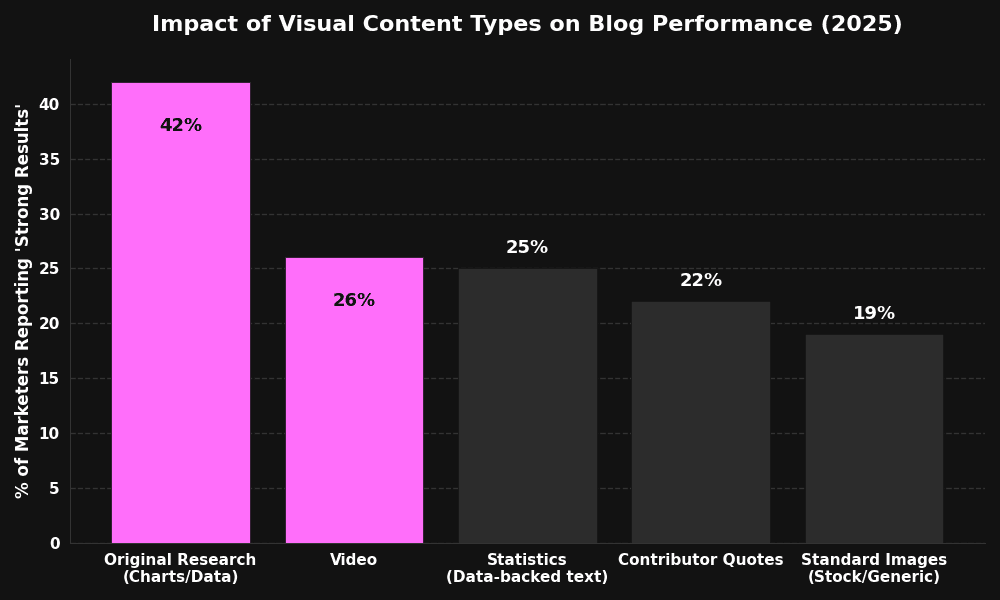
New SEO: Add data-backed visuals, charts, and infographics.
Stock photos are dead weight. In 2026, visuals need to carry information. Custom infographics and data visualisations are not only more engaging for humans, but they are also more likely to be cited and referenced by other sources (and AI models) looking for data.
5. The New Metrics: Citations Over Clicks
Old SEO: Obsess over traffic, rankings, and impressions.
New SEO: Track citation share and LLM brand representation.
This is a hard pill for many to swallow: traffic to top-of-funnel Q&A pages is going down. Why? Because AI answers those simple questions directly in the search results.
We accept that Q&A content gets absorbed by AI. Instead of fighting it, we focus our efforts on mid and bottom-funnel pages, the deep-dive content where complex buying decisions are made. We measure success by how often your brand is cited as the solution, not just how many people land on a "What is X?" blog post.
Conclusion: Be The Source
The "Old SEO" agency that hasn't evolved is still trying to game a system that no longer exists.
At SourceCodeCreative, we focus on making you the "ingredient" that AI trusts. By structuring your data correctly, writing for clarity, and focusing on real customer insights, we ensure your business remains visible in the age of AI.
Ready to Grow in 2026?
We are incredibly excited to partner with ambitious businesses this year. If you are ready to transform your digital presence into a customer-guiding machine, we would love to hear from you. You can get in touch with us here to start the conversation, or if you prefer a face-to-face chat, feel free to book a meeting directly with the team.
However, if you aren't quite ready to chat but want to know exactly how your current website is performing, we have something special for you. We are offering a complimentary, deep-dive review of your current site to identify the technical errors and UX friction points that might be holding you back.
Written by
Ryan Farrow
Creative Director
A pixel perfectionist powered by pre-dawn gym sessions. Off the clock, I’m trading design strategy for dad duties and re-watching the MCU.
Insights
You Might
Also Like

May 27, 2026
Ryan Farrow
How We Helped Hogarths Hotel & Spa Triple Their Organic Search Rankings

Jan 14, 2026
Ryan Farrow
What Legally Needs to Be on a Website in the UK? (The 2026 Update)

Jan 12, 2026
Ryan Farrow
WordPress vs. Framer: The Honest Guide for Ambitious Brands
Jan 5, 2026
Ryan Farrow